

Yeah, another attention grabbing headline, again some of you will have to Google it.
The Wheelies part Uno
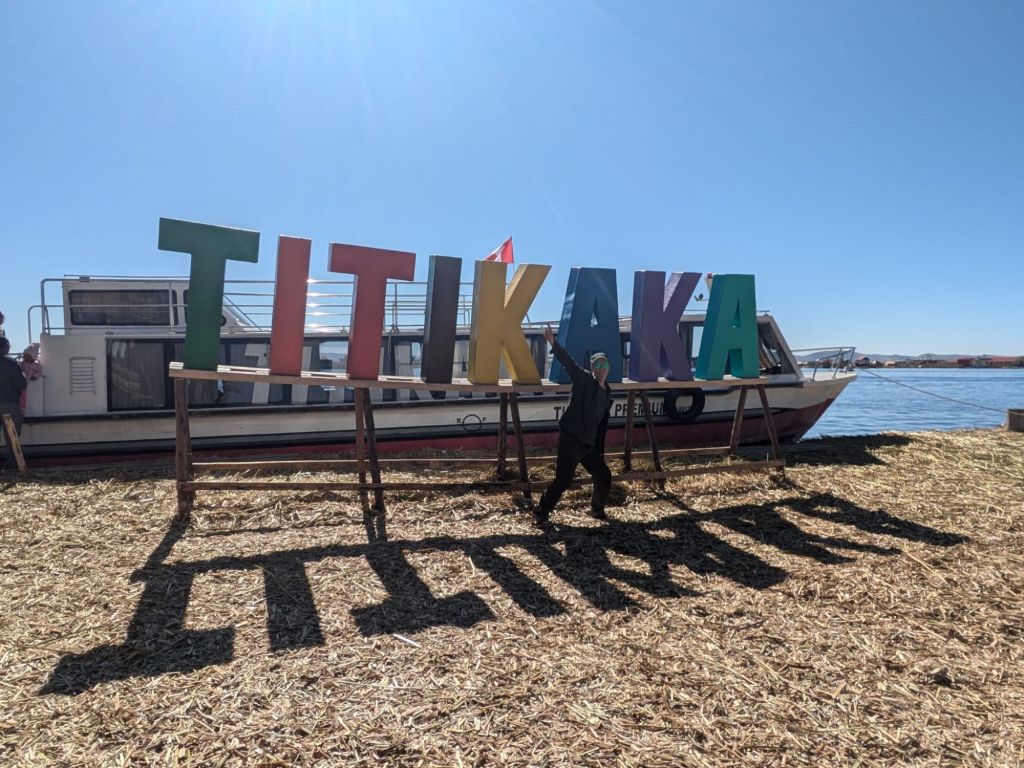
The islands (neè Wheelies) of lake Titicaca – locals and indigenous spell it Titikaka and pronounce it “Titihaha”, at least according to our guide to the islands, Victor SomethingOrOther* – are one of the major tourist stops in South America; straddling Peru and Bolivia, it’s considered a unique place to still experience, supposedly, indigenous people living a simple, rural yesteryear existence. Islas de Los Uros is where one such group ‘live’, the Uros. Their homes sit atop floating platforms; constructed from reeds that grow on the lake.

While Rebecca was particularly looking forward to this part of the trip, it turned out, for me especially, the most disappointing point on our adventure across this continent, want to know why? (Admin – Do tell!)
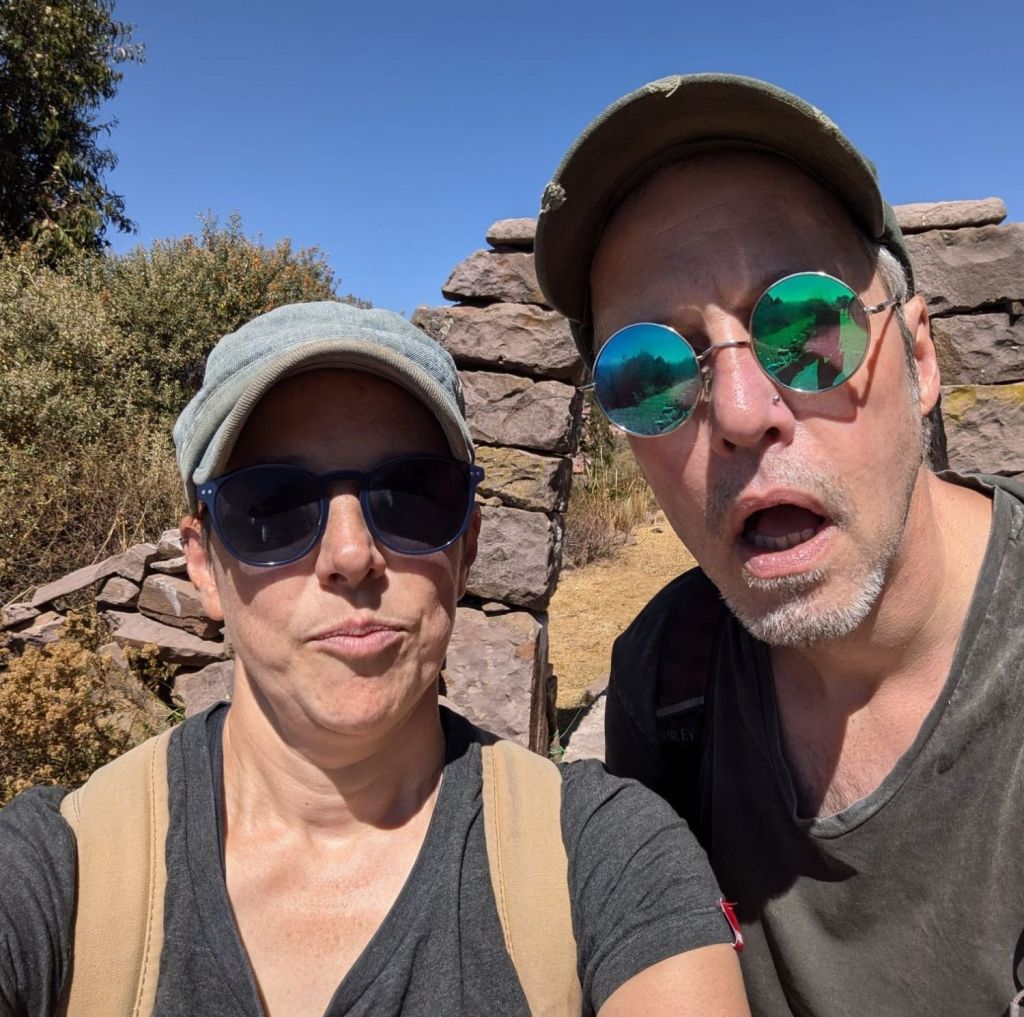
I had read a couple of articles about the Uros islands, one of which describes the floating islands as a “human zoo” while another island, Isla de Taquile, a little more authentic, albeit superficially. As you know I’m pretty cynical about anything I hear or read, either good or bad, so when we had the opportunity to book both islands on a single day trip with Victor, we jumped at the chance so we could decide what they are really like for ourselves.
It is a tourist trap [Uros], one that almost reminds me of a human zoo/museum. It was all very awkward, fake, and a shakedown of the so-called gullible rich tourist.
Los Uros is only a short water bus from Puno (more on Puno later). So after a potted history from out titular guide we disembarked onto a wobbly floating floor, cheered on by waving women plastered with fake smiles. Having been introduced to Bob*, the leader of this particular floating blob, he explained in length how the islands are constructed.


Once the lecture was over, we split into groups and were ushered into people’s homes; small, rectangular and bereft of anything personal, save for a bed and some traditional Uros clothing hanging on the wall; which our female host was keen for Rebecca and I (since we are a couple) to try on. If they actually lived here I found it strange that there were literally no personal items of note; they just didn’t look ‘lived in’!?
Respectfully declining the clothes using my vastly improving Spanish (no grass-your-arse) we were then shuffled outside to be shown a selection of artisan, hand crafted Uros made souvenirs; all of which were mass produced, low quality items, clearly not made on the islands, but manufactured elsewhere and shipped in. Never-the-less, we bought a cloth wall hanging, which Rebecca managed to get at 50% off the asking price! Never mess with a Watkins! At least one that is growing in confidence every day.
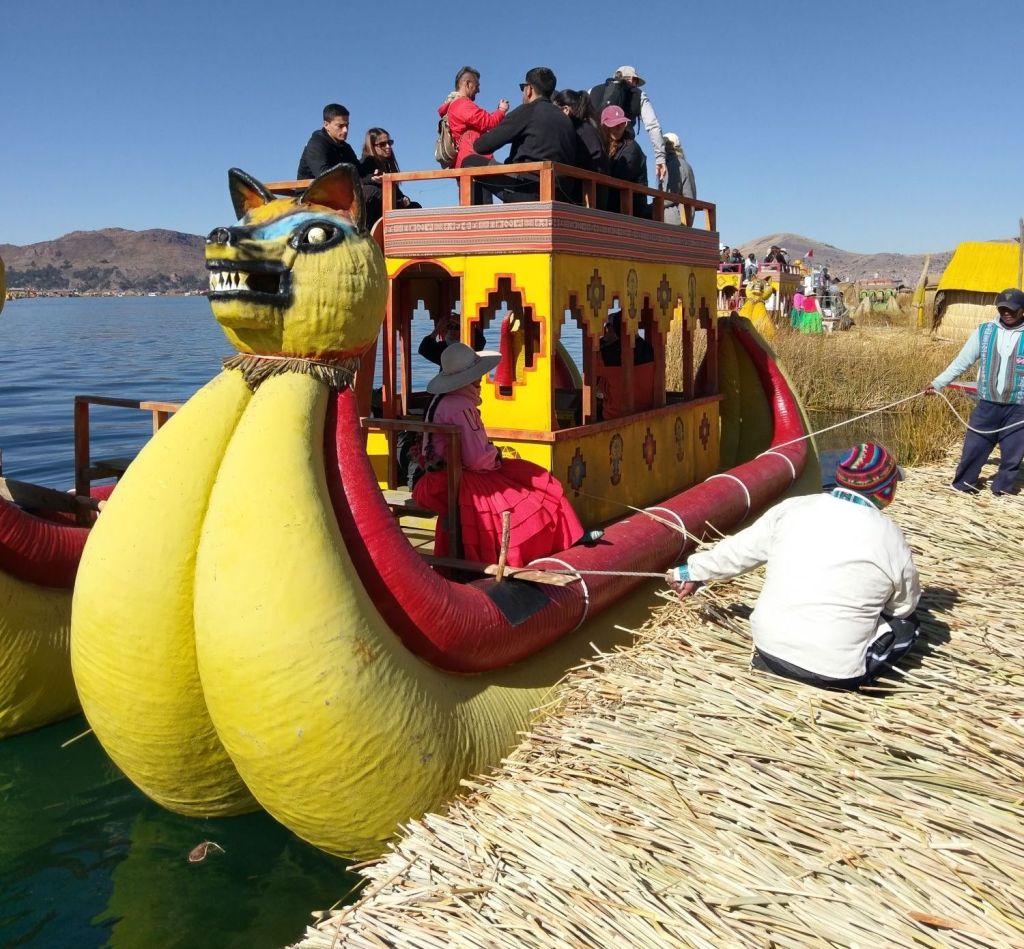
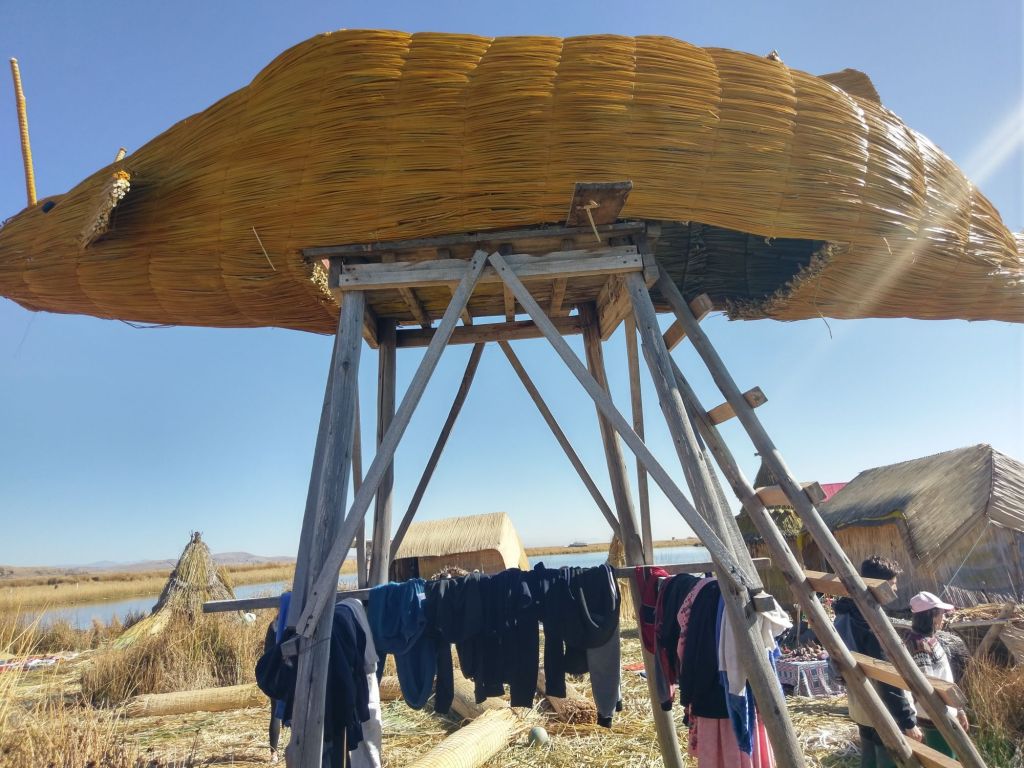
While most of the people touring with us decided to enjoy a short trip on a Uros boat, waved off by dancing and singing Uros women!? Rebecca and I decided to just look around, not that there was much more to see, apart from some clothes hanging out to dry, which were neither wet, nor had left wet drip patches on the ground, or were in the least bit creased; clearly just hung there to give the place a ‘lived in’ look!?
Rebecca’s attitude to all this was to simply take it as an opportunity to see the way people used to live. I on the other hand, bitter and twisted from life (Admin – So true), felt conned. Clearly nobody still lives on these floating museums, but we were made to think they did! So we thus departed, I wishing a match and some petrol were to hand…
*Names have been changes to protect the innocent. (Admin – You mean you’ve forgotten them!)
The Wheelies part Dos
Onwards to Isla de Taquile then, hopeful of a more authentic experience? The Taquileños are known for their sustainable tourism and are also highly regarded in Peru for their handwoven textiles and clothing. The island they sit upon is made of rock rather than reeds, so isn’t floating, more a static caravan than a winnebago!
Our visit began with an indigenous lunch at a local restaurant, the meal consisted of locally made bread with fresh salsa, a tasty quinoa soup and a fish main that I didn’t have the opportunity to photograph as I had eaten it (yum yum) before I even opened my mouth (Admin – Eh ?????). The fish used was trout, not an indigenous species, but introduced to the lake in the 70’s and has now decimated the local fish population; round of applause humans!
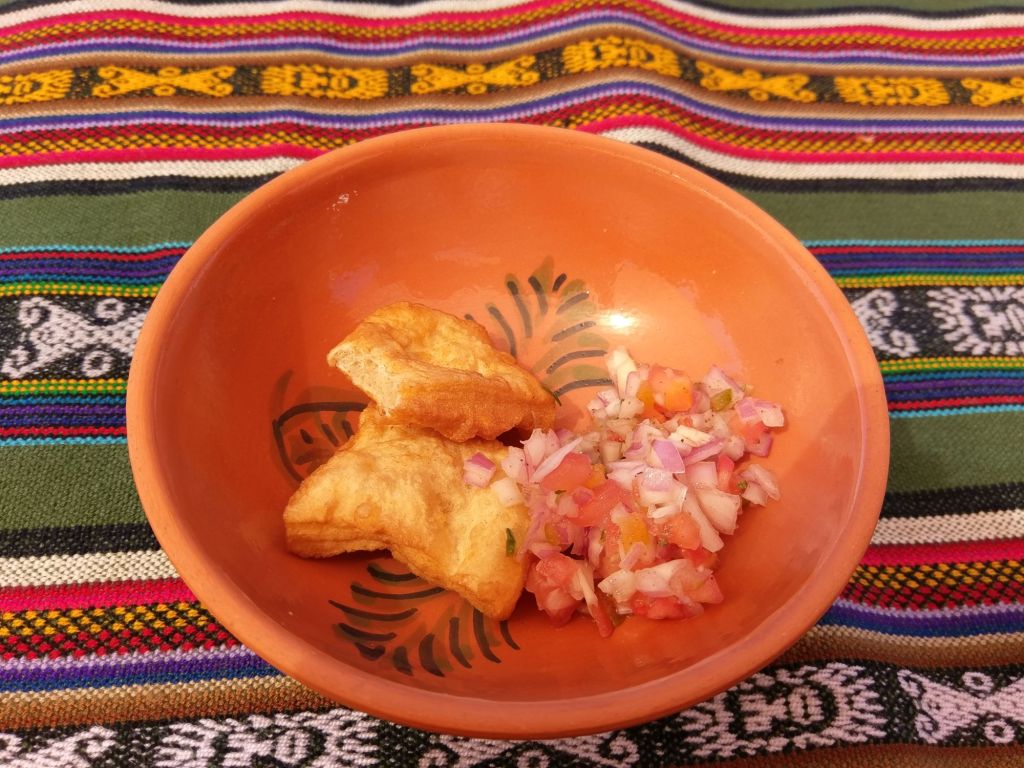
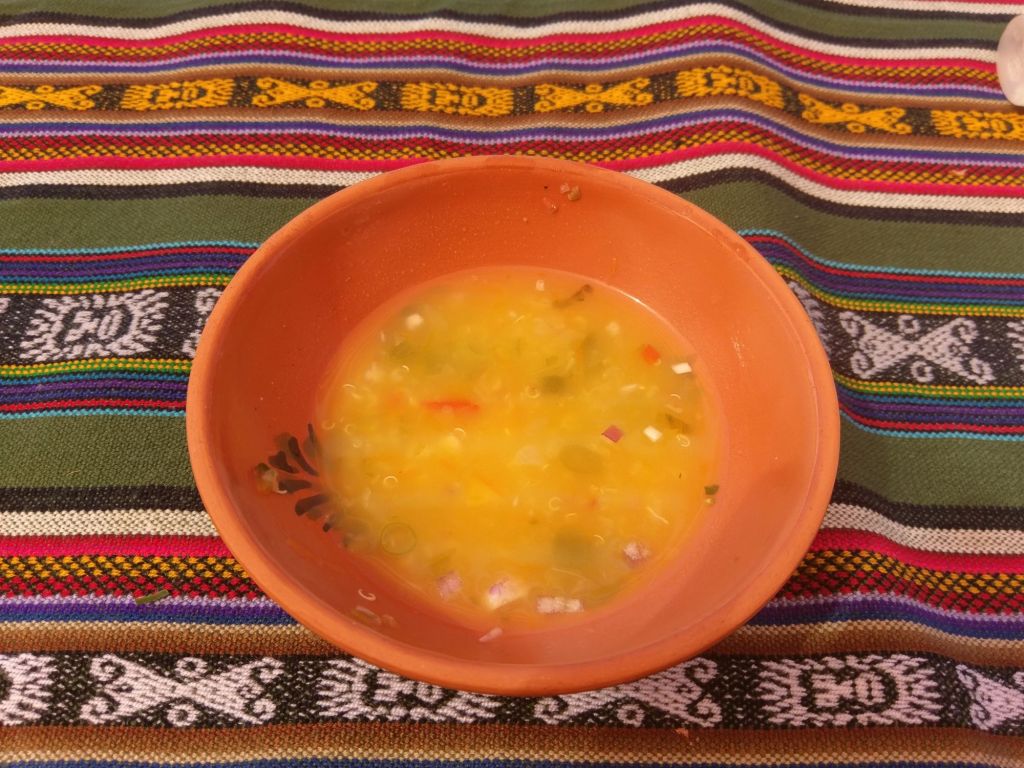
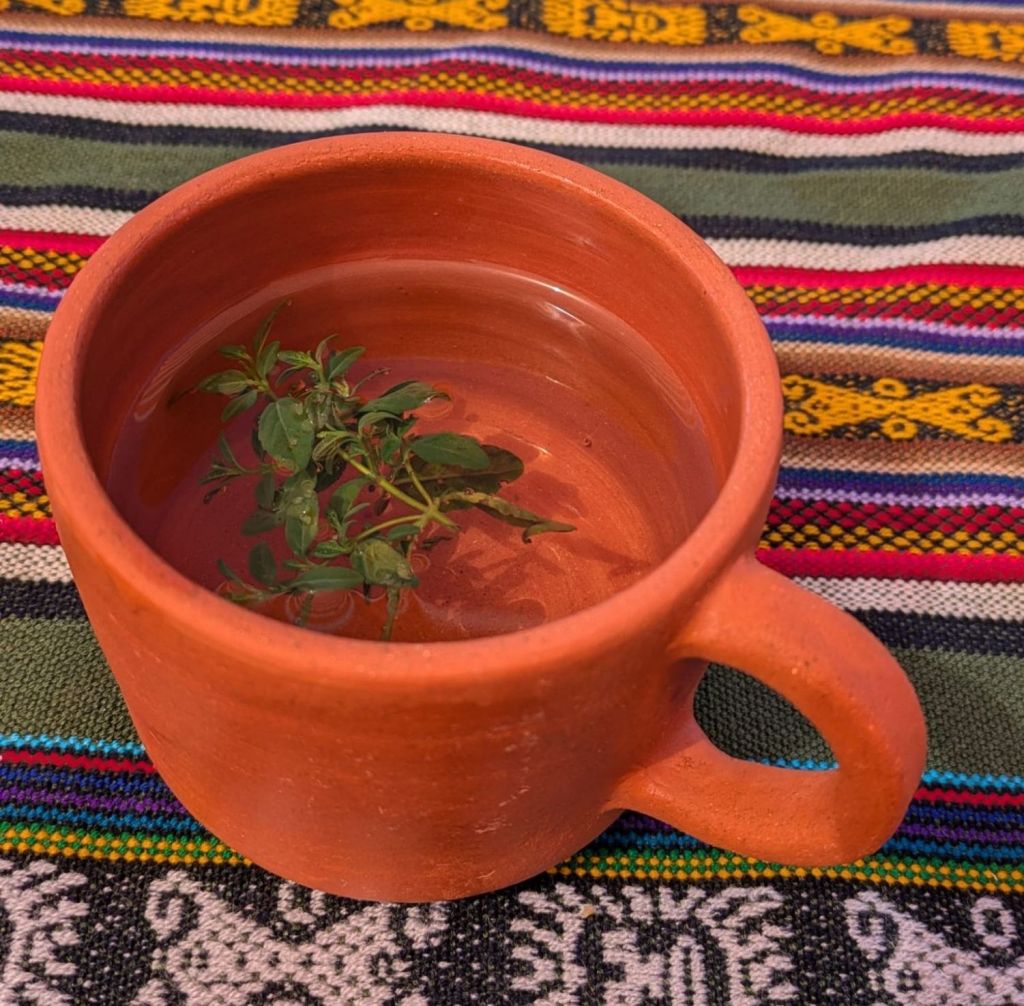
A drink called Muña, a minty tasting tea that is great for altitude sickness, ended the meal where upon we were pounced upon by Victor and his henchmen; for an overlong description of culture and life on the island.
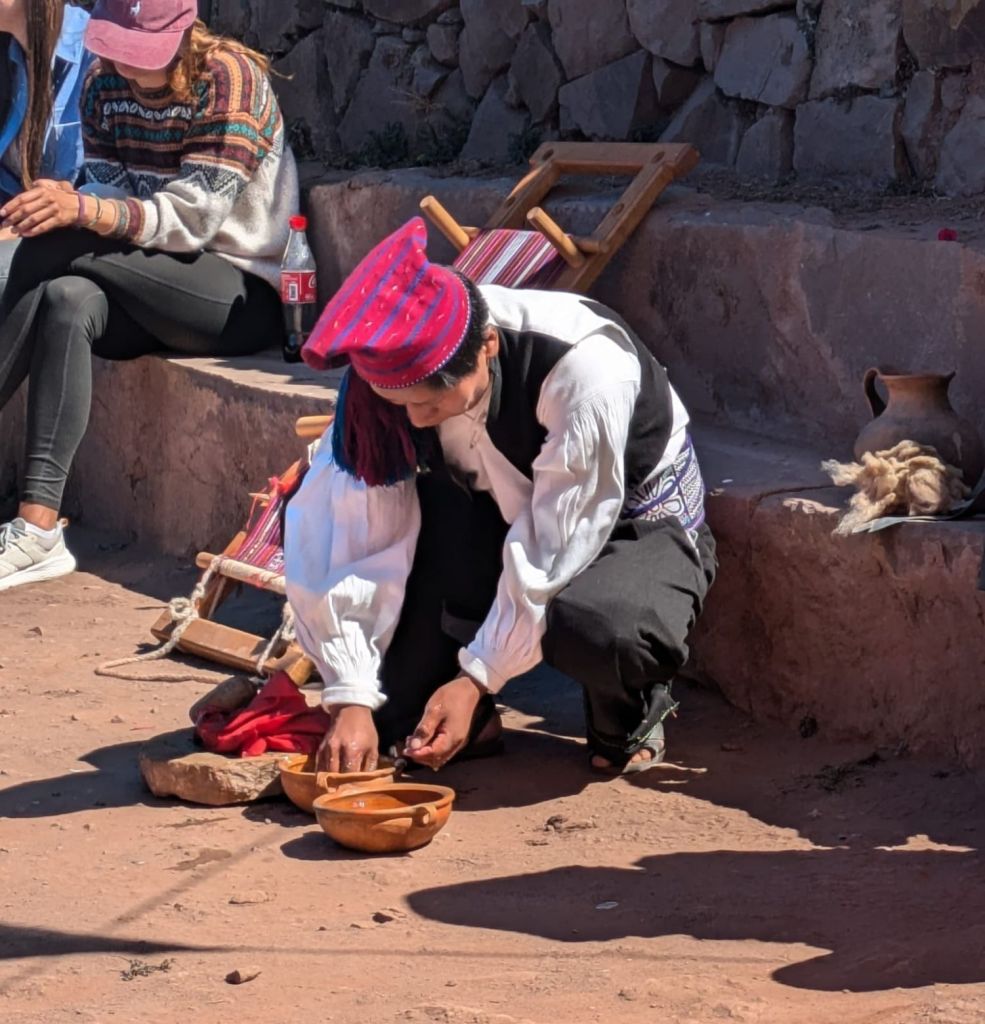
The tour ended with a visit to the islands main square to peruse clothes and gifts made by the people. These seemed much more authentic than on Los Uros but sadly the square became a ‘stand off’; the market stalls on three sides of the square and all the visitors huddled together on the fourth side, with not much interaction between the two armies.

Chorlton
Our base for these disappointing adventures was the town of Puno (neé Chorlton); although every town, village and hamlet in South America appears to be classed a city?

We enjoyed our stay here, and would have probably spent more time given the chance, it was definitely more Chorlton than Fenella Fellorick (just Google it!). But other adventures are in need of our attention, I only hope I’m less disappointed with them.
One thing to keep in mind about travel is that not all of it is exciting. Sometimes it is hard, boring, or even disappointing. Not all places are thrilling. Not all cities have abundant things with which they can capture a tourist’s attention.
So sail onwards we must – or less romantically, catch a bus around the lake – to new lands, namely Bolivia…

 Sloth Journeys