
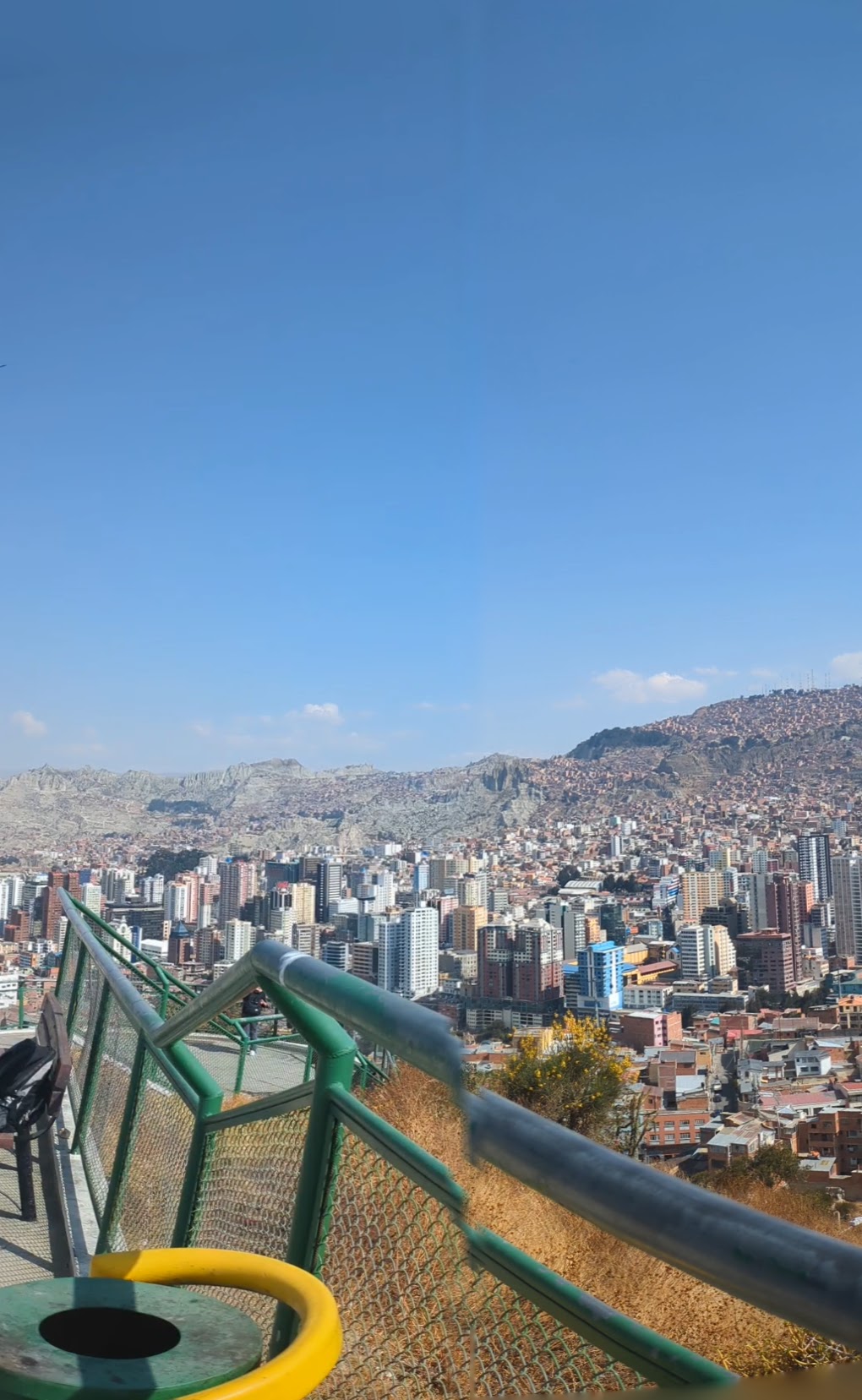
From Copacabana, our next stop was La Paz, apparently the highest capital city in the world at around 3,650m above sea level.
The journey here wasn’t too long, just a few hours, but did involve crossing the Strait of Tiquina on Lake Titicaca, which had vibes of people smuggling as we crossed the water in a tiny unlit ferry after dark…
After getting across the Strait, we then nearly couldn’t get back to our bus, being separated from it by one of the many random parades that seem to go on in Bolivia.

Thankfully, we did make it back to the bus and eventually arrived into La Paz.
The next morning, as we have done in most of the larger cities we’ve visited on this trip, we joined a walking tour the to get a flavour for the city.
This one, unlike previous tours, included a couple of trips on the city’s teleferico (cable car) system, to reach some of the points of interest! Turns out this would not be our last use of the cable car system, but that story can wait…!
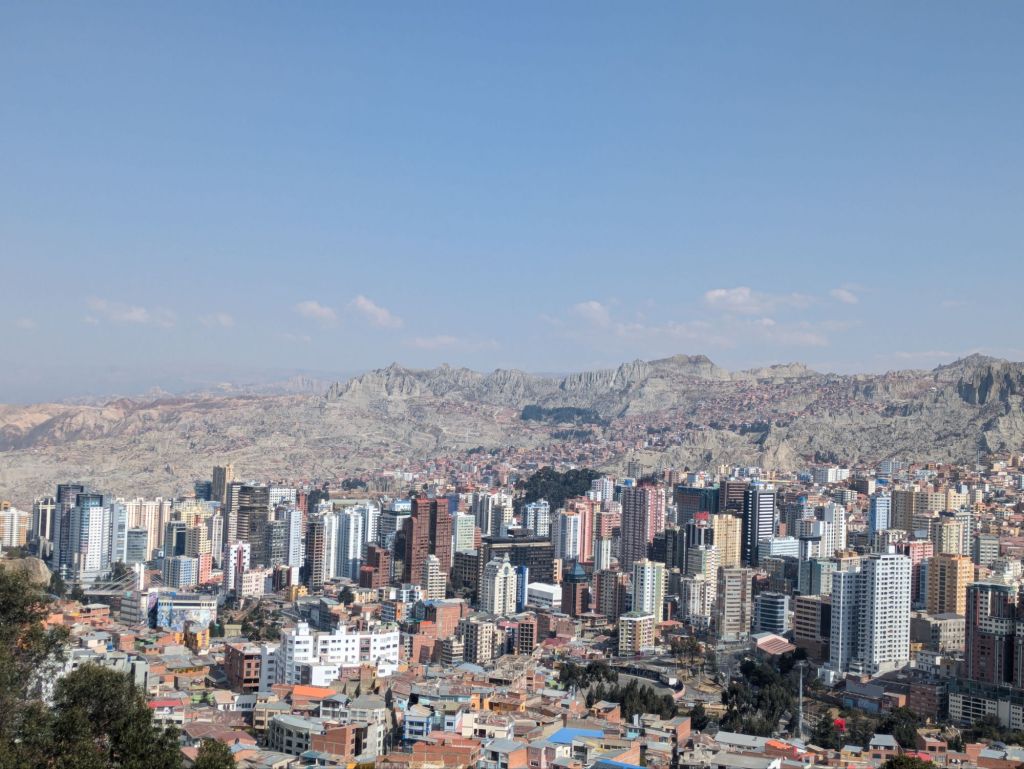
La Paz is built in a bowl between several mountain ranges and technically comprises two cities, La Paz sitting within the bowl itself and El Alto, sitting higher up the slopes. But they essentially run one into the other forming a metropolis.
Our tour started from one of the more bohemian districts, with a good view of the city.

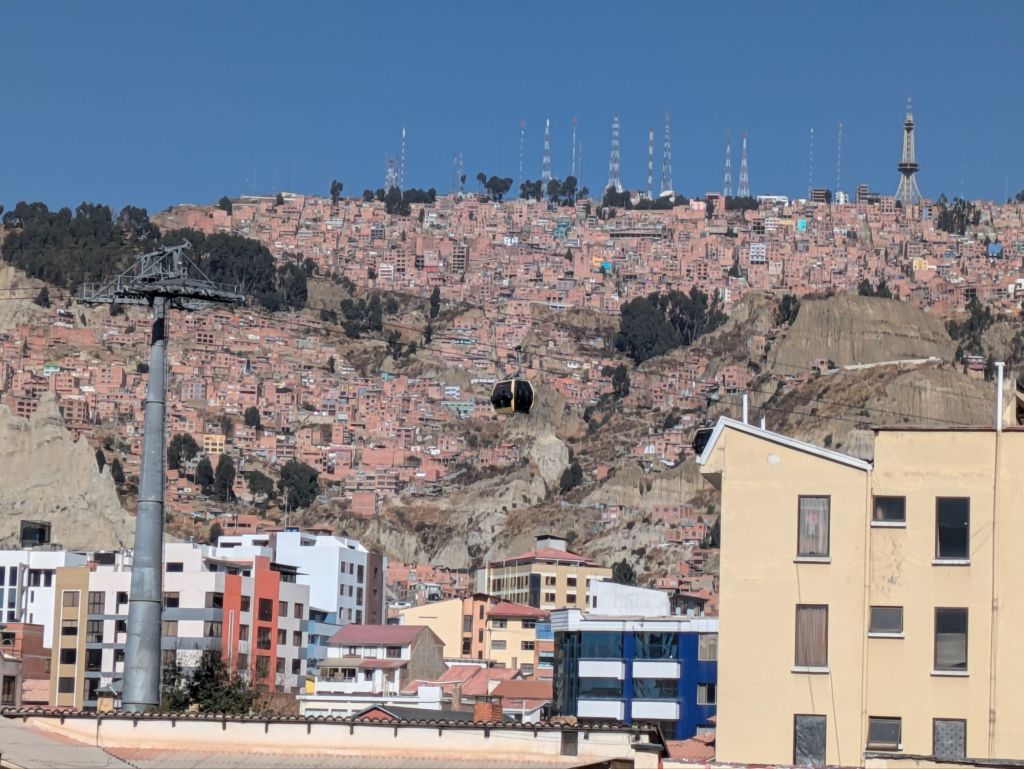
From there, things got more interesting / chaotic / outright crazy as we got a cable car up to El Alto to visit Mercado 16 de Julio (the 16th July Market), which is simple vast, supposedly stretching for some 6km!

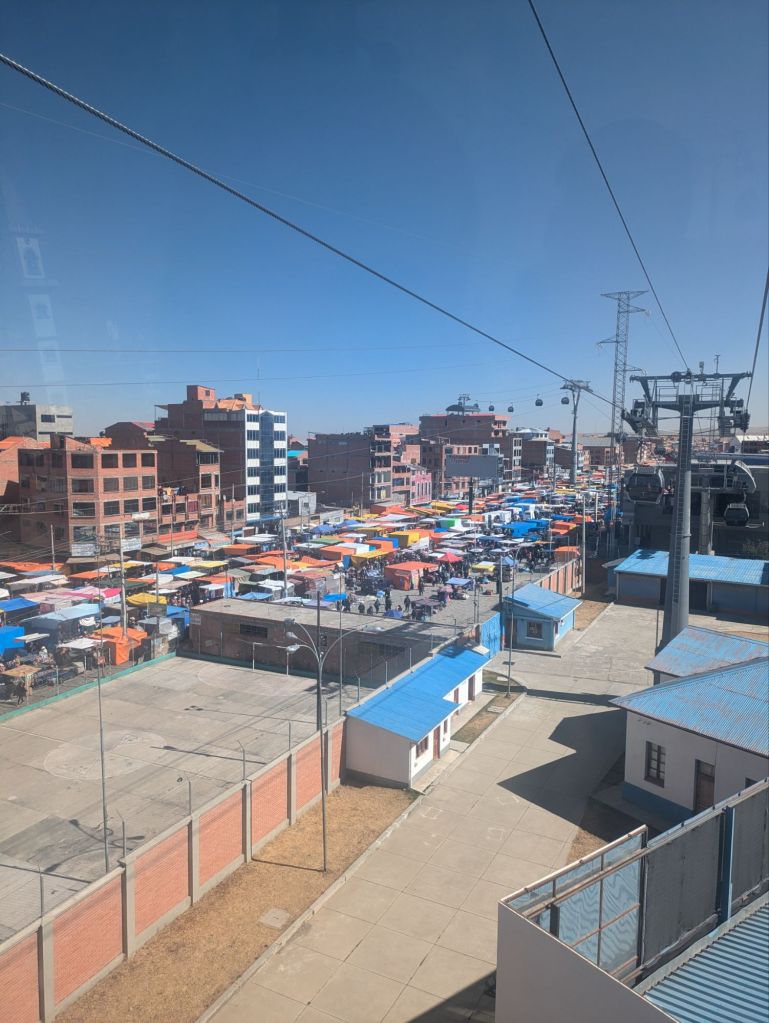
We obviously only visited a tiny corner of the market, but the crowds of people and the hundreds of stalls crammed together selling anything from cosmetics to flip flops to car parts and food, right next to each other was pretty overwhelming!
From there, we then headed to the ‘witches market’ zone, where our guide told us about some of the rituals that many Bolivians still partake of to bring them luck (or indeed bring bad luck to others…). These rituals typically involve burning various combinations of herbs, along with small models of the things you want luck for (such as a new house or car or money) along with other offerings, typically cigarettes and alcohol. It was all pretty surreal!
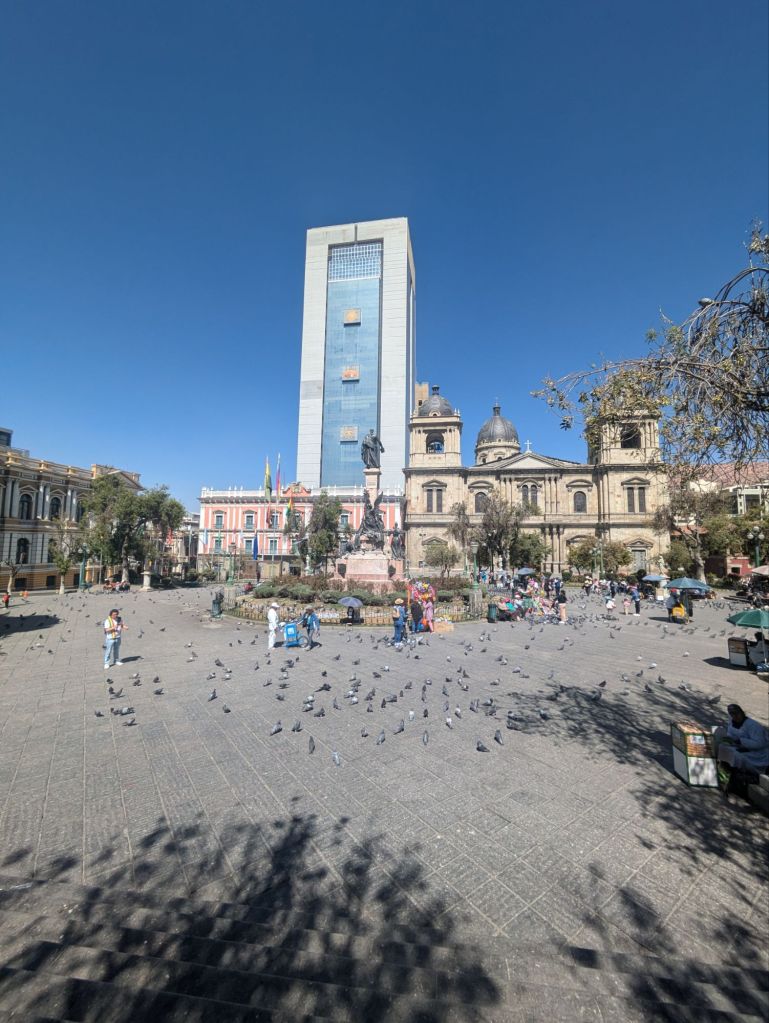
We then visited some key buildings (the main cathedral and government buildings) to hear about some of the history and politics of the country. Like all the South American countries we’ve visited, corruption in politics is a key theme that crops up, and it sounds like there is little expectation among our various guides of any imminent or fundamental change to the situations in these countries, despite many and regular protests by the citizens.
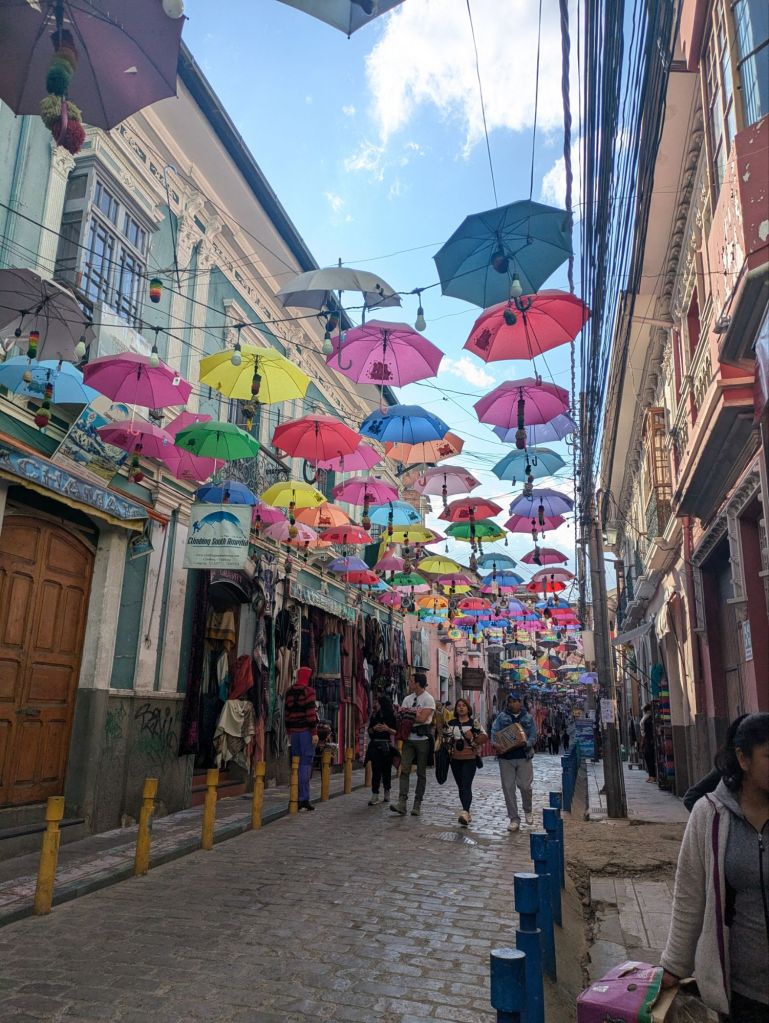
Finally, we visited another witches market, which was a strange place as it had parts that were very obviously aimed these days at tourists, selling the usual trinkets, next to stalls selling llama and pig foetuses, which are either burned in rituals or buried under the foundations of new buildings to ‘ensure’ their safety and longevity… Needless to say we found this very bizarre and somewhat unsavoury from our western perspective.
Whilst we’ve seen and heard of numerous different beliefs and rituals performed across the various countries we’ve visited, Bolivia’s have presented the most obvious clash between the old and new, with a lot of people having access (even in more rural areas) to mobile phones and the internet and cable TV and other modern trappings (and access to all the knowledge that provides) and yet many still make offerings to Pachamama (Mother Earth) or other deities to bring them luck and success.
For our other couple of days in La Paz, we visited the folklore and ethnographic museum, to try and get a bit more of a feel for Bolivia and its people. Unfortunately though, all the information boards were in Spanish and we weren’t allowed to take photos, so all we could really do was look at the pretty costumes and read a few of words here and there with our meagre Spanish!
We also balanced out the cultural trips with a visit to The English Pub!

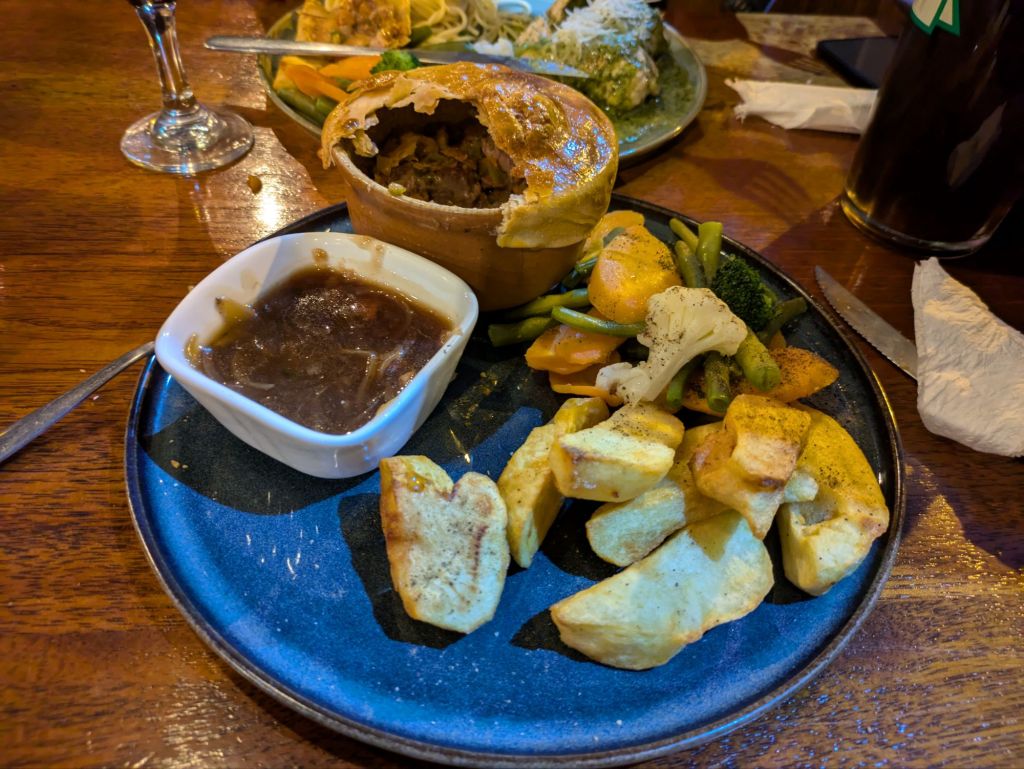
Whilst we have actually mostly tried to visit more local places to eat whilst on our travels, Bolivia has a (well deserved it turns out!) reputation for giving travellers food poisoning. So we’ve definitely been more cautious about where we’ve eaten in Bolivia compared to the previous countries. Which is a shame, because we have really enjoyed going to the local mercados (markets) and trying local specialities. But with lots of long distance bus rides and amazing activities we really want to do, we’ve sometimes resigned ourselves to eating in the more touristy places where their food hygiene standards and use of bottled or filtered water (instead of tap water which will definitely make you sick) is a likely to be a little better! Oh, and after 3 months on the road, the thought of pie and chips was just too strong to ignore!
As a footnote, due to its location (and that of the places we’re visiting in Bolivia) we’ve actually already passed back though La Paz once since our first visit (Admin – as they are so tardy with their blog posts that this entry is about 3 weeks behind real life!) and we will have to do so once more. So this photo of the pie is actually from our second trip to the English Pub! Maybe I’ll get to enjoy fish and chips when we next pass through!!
From La Paz, we were next headed, finally, to the Amazon! To get there, we would have to endure a 14 hour overnight bus along what is known as ‘Death Road’ due to its vertiginous drops and terrible safety record. Thankfully, the worst part of it is now closed to vehicular traffic and is only used for mountain bike tours (no, we didn’t partake despite being avid mountain bikers back home – I’m too scared of heights for that), but there are still some very twisty, high and narrow sections and most of it is still unpaved. However, we nearly didn’t even manage to make our bus to experience it, as we were leaving the day before Independence Day in Bolivia and it turned out there was a huge parade going on in the middle of the city. So when it was time to leave couldn’t get an Uber or a normal taxi to the bus depot as they were all stuck on the other side of the parade and in the end we had to make a mad dash across the city using the Teleferico system, laden with our big backpacks to make our bus in time! Not the most stress free way to get to a bus that we were already somewhat apprehensive about!
Nonetheless we made it (and the subsequent awful bus ride!), but tales of the Amazon will have to wait for another day!

 Sloth Journeys